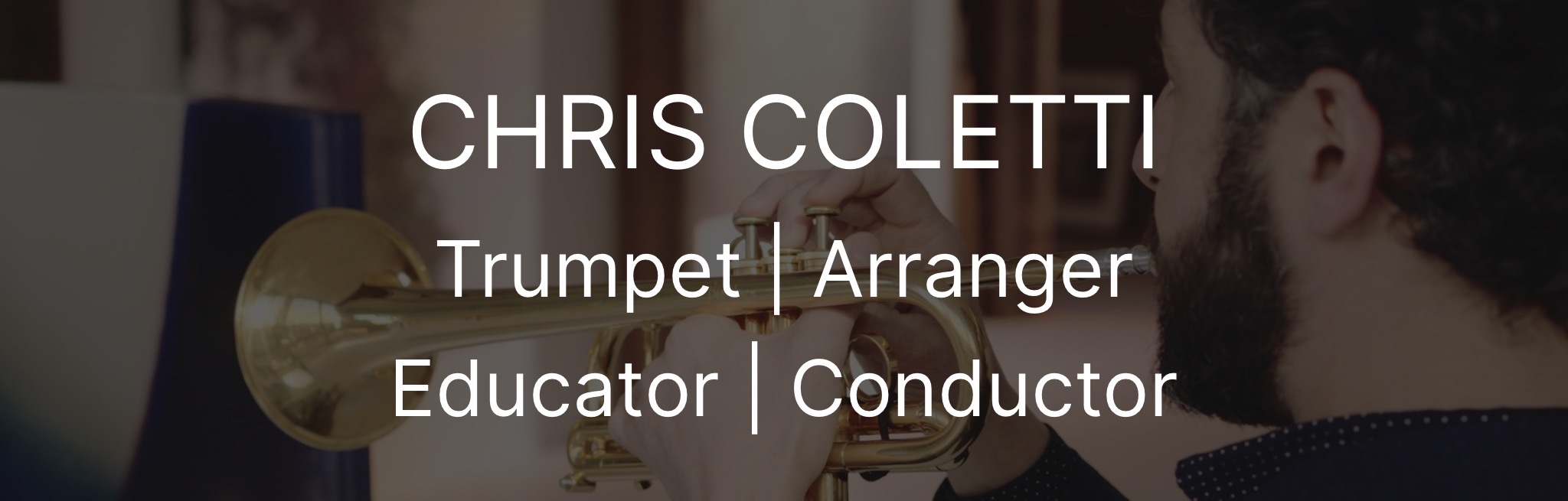


Written by Chris Coletti
Professional and amateur performers alike have to deal with performance anxiety all the time.
Some claim they eventually overcome it, some never experience it, but some of the best in the business get nervous before every single performance but still perform their best.
Some get so nervous that they get violently ill before every show(!!)–but the audience never sees it. How do they do it? While everyone is different, the following 7 steps should help you on your way to becoming a more confident performer:
1. Nervousness defined.
The number one reason for getting nervous for a performance is simple: Nervousness occurs when you hold yourself to a higher standard in performance than in practice. Fortunately, this is the easiest barrier to overcome. Figure out a way to raise your standards in the practice room — recording yourself (video is best), performing often, whether in front of peers/teachers/students/audition committees — the key is to put yourself in situations where suboptimal performance is not an option, as often as possible.
2. Think like a pro.
One of the key differences between professionals and amateurs isn’t necessarily talent, it’s that pros don’t have failure as an option. When you don’t have a choice whether to perform your best or not, your prepare differently—you prepare better.
3. Lose the ego.
Most performers psych themselves out by approaching performance situations as an opportunity to impress people. NO ONE CARES. If you’re a musician or a speaker, people do not come to your performance to be “impressed.” They come to be moved and inspired. Focus on moving others and inspiring your audience and your nerves will fade away. Read the book The 7 Habits of Highly Effective Peopleby Stephen Covey; it will make you a more confident and competent performer by teaching how to focus on what really matters. This book is a must-read for the serious performer.
4. Focus on the task at hand.
Performing in public, whether as a musician or as a speaker, requires focus—you really need to be in the zone. There is no room for being self conscious, so focus on the task at hand (making music, getting your message across, etc.) and not yourself. This relates to the previous section: nervousness is often synonymous with self-consciousnesses. If you’re feeling self-conscious on stage it’s a good indicator that your focus is on yourself (think: EGO) and not on the impact of the performance on others (think: SHARING). The book Performance Success: Performing Your Best Under Pressureby Don Green can teach you to get in the zone when it really counts.
5. Be prepared.
Performances don’t always go as planned—many factors are out of your influence. Preparation, however, is the one thing you can directly control. Showing up for a performance unprepared is one of the silliest ways to make yourself nervous as it is completely avoidable. Keep in mind that preparation may mean more than just working on your material; mastering the delivery is a major part of any performance. The solution? Perform often. In a crunch for time? Record yourself (video is best) over an over again until you’re delivery is effortless.
6. Is it fear? Or just excitement?
Performing is thrilling. If you don’t enjoy that excitement it might not be the career for you. Learn to differentiate between fear: often a combination of self-consciousness and under-preparedness–vs excitement: a totally normalreaction to an abnormal situation, such performing a complex task in front of an audience. Feel the Fear and Do it Anyway by Susan Jeffers is the classic book that has been empowering professional performers with confidence on stage for decades.
7. Quiet the Mind.
Your thoughts shouldn’t be louder than the silence in the room. Focusing on your breathing is a very effective way to lower your heart rate and relax your spirit. Quieting the mind so it can operate optimally in high pressure situations takes practice. There are hundreds of meditation techniques, many thousands of years old, that train you to clear your mind at will. Meditation, including yoga, is one of the most effective ways to master this aspect of performing, and the benefits apply off the stage as well. Eugen Herrigel’s Zen in the Art of Archery is a is one of the most effective books on focus, mastery and performance. One of the best performer-focused yoga instructors out there is Nicole Newman, founder of Yoga for the Arts. She’s worked with top performers ranging from members of the New York Philharmonic, to students and faculty of top schools like Juilliard and New York University.Some people find that works like A New Earthby Eckhart Tolle can help you bring more presence to your life, transforming the increased awareness that happens during performances into energy that will no longer throw you off, but inspire the best in you. Another amazing book on the subject of presence is You Are Here: Discovering the Magic of the Present Moment by Thich Nhat Hanh. His work is very accessible and you will notice an improvement as soon as you crack the book open.
Books and other suggestions mentioned in this post:
-
Zen in the Art of Archeryby Eugen Herrigel
-
Feel the Fear and Do it Anyway by Susan Jeffers
-
The 7 Habits of Highly Effective Peopleby Stephen Covey
-
Performance Success: Performing Your Best Under Pressureby Don Green
-
A New Earthby Eckhart Tolle
-
You Are Here: Discovering the Magic of the Present Moment by Thich Nhat Hanh
-
Yoga for Musiciansfounded by Nicole Newman

[/fusion_builder_column][/fusion_builder_row][/fusion_builder_container]


Leave a Reply to Becky PritchardCancel reply